



Georgina Health
All services

Uterine Fibroid Embolization Treatment in Fort Myers and Naples

Minimally Invasive Fibroid Treatment in Fort Myers & Naples

Heavy periods, pelvic pressure, painful cramping, and abdominal fullness can affect everything from your energy and comfort to your work, exercise, travel, and social life.

If fibroid symptoms are interfering with your everyday routine and you're looking for an alternative to hysterectomy or other surgery, Uterine Fibroid Embolization (UFE) may offer another option.

At Georgina Health, our vascular and interventional team uses advanced image guidance to treat the blood vessels supplying uterine fibroids. By reducing their blood supply, UFE allows fibroids to gradually shrink while preserving the uterus.

A woman lying on a sofa with her hands over her abdomen

Treatment at a glance

Fibroid Treatment Without Surgery

UFE offers appropriately selected patients a minimally invasive, uterus-preserving approach to symptomatic fibroids.

  • Uterus Preserving

    UFE treats fibroids without surgically removing the uterus.

  • Minimally Invasive

    Treatment is performed through a small arterial access point rather than open abdominal surgery.

  • Treats Multiple Fibroids

    UFE can address multiple fibroids during the same procedure rather than removing them individually.

  • Image-Guided Precision

    Advanced imaging helps identify the arteries supplying fibroids so treatment can be delivered selectively.

  • Focused on Quality of Life

    Treatment is designed to improve symptoms such as heavy bleeding, pelvic pressure, and pain.

A woman taking notes during a phone call

Fibroid Symptoms: When Fibroids Affect Daily Life

When Fibroids Begin Affecting Everyday Life

Uterine fibroids are noncancerous growths that develop from muscle tissue in and around the uterus.

Some fibroids cause no symptoms and require no treatment. Others can become large or numerous enough to significantly affect comfort and quality of life.

Symptoms may include:

  • Heavy menstrual bleeding
  • Periods lasting longer than usual
  • Painful menstrual cramping
  • Pelvic pain or pressure
  • Abdominal fullness or bloating
  • Frequent urination
  • Constipation
  • Lower back discomfort
  • Pain during intercourse
  • Fatigue related to blood loss
  • Iron-deficiency anemia

UFE treats fibroids by reducing their blood supply. Over time, the treated fibroids shrink, which may reduce bleeding, pressure, and other symptoms.

The UFE Procedure: How It Works and What to Expect

Close-up of an ultrasound machine's controls

What Is Uterine Fibroid Embolization?

UFE, also called Uterine Artery Embolization, is a minimally invasive treatment performed by an interventional radiologist.

Using advanced image guidance, the physician navigates a thin catheter into the arteries supplying the uterus.

Microscopic embolic particles are delivered into the vessels feeding the fibroids. The resulting reduction in blood supply causes fibroid tissue to gradually shrink.

The uterus remains in place and continues receiving blood through other vascular pathways.
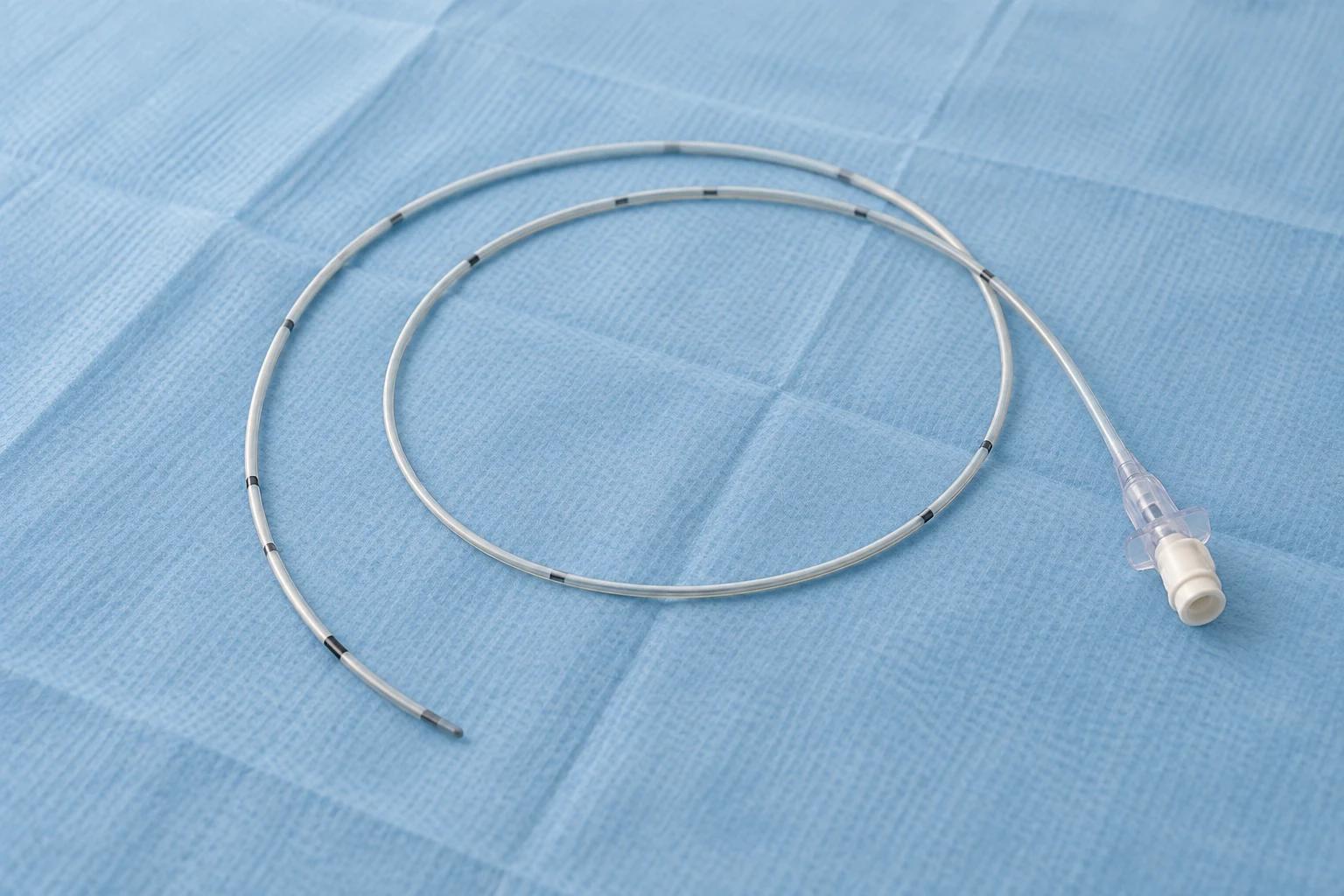
Illustrative catheter on a blue clinical drape

What Happens During UFE?

Your treatment begins with an evaluation of your symptoms, health history, previous treatments, imaging, and goals.

Ultrasound or MRI may be used to better understand the number, size, and location of your fibroids.

During UFE:

  1. A small arterial access point is created, usually at the wrist or groin.
  2. A thin catheter is guided through the arteries using image guidance.
  3. The uterine arteries supplying the fibroids are identified.
  4. Tiny embolic particles are delivered into the targeted vessels.
  5. Blood flow to the fibroids is reduced.
  6. The catheter is removed and the access site is closed.

UFE is commonly performed with local anesthesia and sedation rather than general anesthesia.

Cramping and pelvic discomfort can occur after treatment as the fibroids respond to the loss of blood flow. Your Georgina Health team will provide individualized medication and recovery instructions.

Illustrative image of a woman resting on a sofa with a book and blanket

What Symptoms Can UFE Improve?

UFE may help appropriately selected patients experiencing:

  • Heavy menstrual bleeding
  • Prolonged periods
  • Pelvic pressure
  • Painful cramping
  • Pelvic discomfort
  • Abdominal fullness
  • Frequent urination caused by fibroid pressure
  • Constipation caused by fibroid pressure
  • Fibroid-related lower back discomfort
  • Anemia associated with heavy menstrual bleeding

What Does the Research Say About UFE?

UFE is an established treatment for symptomatic uterine fibroids and has been studied as an alternative to surgical approaches including hysterectomy and myomectomy.

Research has found that many patients experience significant improvement in bleeding, pressure, pain, and quality of life after embolization.

Compared with major surgery, UFE generally involves a shorter hospital stay and faster return to normal activities.

However, treatment decisions require careful consideration. Some patients require additional treatment for fibroids in the future, and myomectomy or another approach may be preferable depending on fibroid characteristics and reproductive goals.

Future pregnancy after UFE is possible, but the effects of embolization on fertility and pregnancy remain an important area for individualized discussion.

That's why Georgina Health evaluates your symptoms, fibroid anatomy, health history, age, and future pregnancy goals before recommending treatment.

A woman walking along a rocky shoreline

Are You a Candidate for UFE?

UFE may be worth considering if:

  • You've been diagnosed with symptomatic uterine fibroids.
  • Heavy or prolonged periods are interfering with your life.
  • You experience pelvic pressure, pain, or bloating related to fibroids.
  • Medication hasn't provided adequate symptom relief.
  • You want to preserve your uterus.
  • You want to explore an alternative to hysterectomy or myomectomy.
  • You prefer a minimally invasive treatment with less recovery than major surgery.

Not every patient with fibroids is an appropriate candidate for UFE. Fibroid size, number, location, other uterine conditions, overall health, and future pregnancy plans may affect treatment recommendations.

Why Choose Georgina Health for UFE?

UFE requires detailed vascular knowledge and precise image-guided navigation of the arteries supplying the uterus.

At Georgina Health, embolization is part of our broader expertise in advanced minimally invasive medicine.

  1. 01

    Interventional Radiology Expertise

    Our team specializes in catheter-based treatments performed with advanced medical imaging.

  2. 02

    Image-Guided Precision

    Real-time imaging allows targeted delivery of treatment to arteries supplying the fibroids.

  3. 03

    Personalized Treatment Planning

    We consider your symptoms, imaging, medical history, previous treatment, and reproductive goals before recommending UFE.

  4. 04

    Whole-Patient Care

    We believe treatment decisions should reflect the complete patient and her priorities—not simply the presence of fibroids.

  5. 05

    Support From Consultation Through Recovery

    Our team provides education, procedural care, and follow-up throughout your treatment journey.

Take the Next Step Toward Fibroid Relief

You shouldn't have to plan your life around heavy bleeding, pelvic pressure, or fibroid pain.

If you're looking for a uterus-preserving alternative to major fibroid surgery, Georgina Health can help you understand whether UFE may be appropriate for you.

Frequently Asked Questions

Is UFE the same as Uterine Artery Embolization?

The terms are frequently used interchangeably when embolization is performed specifically to treat symptomatic uterine fibroids.

Does UFE remove fibroids?

No. UFE reduces the blood supply to the fibroids, causing them to shrink gradually.

Does UFE remove the uterus?

No. UFE is a uterus-preserving treatment.

Will I still have periods?

Many patients continue to menstruate after UFE. Individual responses vary, and your age and ovarian function may influence menstrual changes.

How quickly will my symptoms improve?

Improvement is gradual. Fibroids continue to shrink over time rather than disappearing immediately after treatment.

Is UFE better than hysterectomy?

Neither approach is universally better. Hysterectomy is definitive because the uterus is removed, while UFE provides a minimally invasive uterus-preserving option. Treatment depends on your individual needs and goals.

Can I become pregnant after UFE?

Pregnancy can occur after UFE, but the effect of UFE on future fertility and pregnancy is complex. Patients who hope to become pregnant should discuss reproductive goals before treatment.

Is UFE covered by insurance?

Coverage varies by plan and medical necessity. Our team can help verify benefits before treatment.

Uterine Fibroid Embolization in Fort Myers & Naples

Georgina Health provides advanced minimally invasive and image-guided care for patients throughout Fort Myers, Naples, and Southwest Florida.

If fibroid symptoms are affecting your comfort, energy, or quality of life, our team can help you understand your treatment options and determine whether UFE may be appropriate.